Wine columns and undercounter wine
Sub-Zero wine storage repair, one zone at a time
A Sub-Zero wine unit is not one cold box but a stack of small climates, each with its own setting, its own air path and its own way of going wrong. Brentwood Refrigeration Services looks after full-height wine columns and the under-counter wine models around the Westside, working zone by zone with the collection in sight the whole time.
4.8 stars of 5 tallied over 187 client write-ups About the rating
- Book a visit
- (310) 878-0630
- $89 per house call · visits 8–6 daily · phone 24/7
Why a two-zone cabinet breaks in two different ways
Most Sub-Zero wine storage is split into separately controlled zones, so the upper section can sit at one setting while the lower one holds another. That split is the reason to own the appliance, and it also explains why a remark like "the wine fridge is warm" seldom tells the whole story. Often a single zone has drifted, and the reason lives in that zone alone: its fan, its sensor, its stretch of door seal, or bottles crowding its air return.
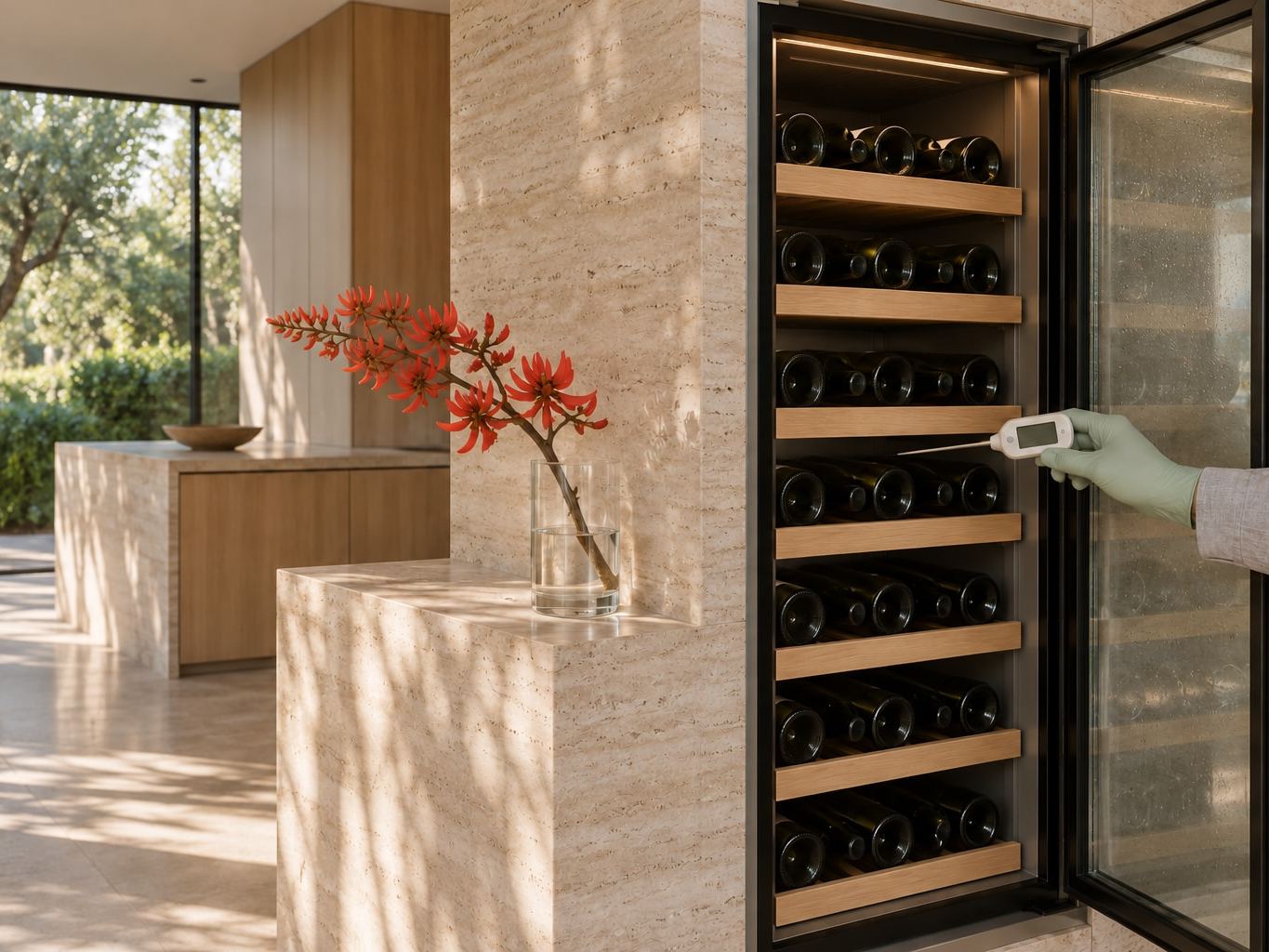
On every visit, each zone has to answer three questions. Does it really hold the temperature its display claims? Is air circulating through the racks, or pooling in a still pocket at the back? And is moisture behaving, neither fogging the glass nor drying out corks? A zone can pass two of those and flunk the third, so we test them separately rather than grading the cabinet as one thing.
Around Brentwood, wine units end up in places a refrigerator never would: a bar alcove off the family room, a converted butler's pantry, the end of an island that faces a bright west window. Placement counts, because a glass door in afternoon sun or a recess with nowhere for warm air to escape adds its own load to the compressor. Part of every repair is deciding whether the unit is failing or just outmatched by where it stands.
Where can I find Sub-Zero wine cooler repair in Los Angeles?
Brentwood Refrigeration Services, an independent shop based in Brentwood, keeps Sub-Zero wine storage working, tall columns and under-counter models alike, in eleven Westside places. Coming to your home costs $89, money that is deducted again once you approve a repair, and nobody names a repair figure until every zone has been tested.
Serving zone and cellar zone ask different things
Plenty of owners keep bottles about to be opened in one zone and bottles meant to rest for a long while in the other. Those two jobs wear on the machine in different ways, including how temperature and humidity hold up.
Serving zone
- Opened often, so warm, humid kitchen air keeps rushing in
- A short swing after restocking is expected; a slow recovery is not
- Gasket fatigue usually appears here earliest, on the side people pull
- Fogged glass here most often means the seal or a door that did not quite latch
Long-rest zone
- Opened rarely, so a fault can hide unnoticed for weeks
- A slow drift matters more than a brief spike
- Air that turns too dry can, over a long stretch, shrink corks
- A fan gone quiet here is easy to miss until labels feel damp or the section warms
Our readTrouble in the serving zone tends to announce itself fast. Trouble in the resting zone is quiet, which is why both get measured on every visit, even when the call was about only one.
Quick looks that can save a visit
No tools involved. Each look either clears up the problem or trims the visit.
- Bottles are not wedged against the rear wall or covering the vents in any zone
- The door swings closed by itself and latches, with no neck or rack sticking out
- The toe-kick grille is free of rugs, baskets and a layer of dust
- Each zone's setting is what you meant it to be; buttons get nudged during cleaning
- No direct afternoon sun lands on the glass door
- You know which zone misbehaves and whether a fan can be heard with the door shut
Chillier does not mean safer
-
Often heard
The colder a wine unit runs, the better for the bottles.How it really worksEach zone is meant to hold the setting suited to what sits in it, as described in the Sub-Zero guide for your model. Dropping a zone well below that makes the compressor labor harder and can leave reds too chilled to enjoy, without helping them keep.
-
Often heard
Droplets behind the glass door are just what wine fridges do.How it really worksA brief mist after a long door opening clears by itself. Beads that linger, or run down the inside of the glass, mean the seal leaks or the door is not fully latching.
-
Often heard
A correct number on the screen means the zone is healthy.How it really worksThat screen relays one sensor's view. Air can stall in the corners of a crowded zone, so we compare it with a separate probe placed among the racks.
What stops a Sub-Zero wine storage unit from cooling?
Usually one zone is the problem rather than the entire cabinet: a fan that has gone still, a sensor feeding the control a wrong value, or bottles choking the air return. If both zones warm up together, suspicion moves to parts they share, such as the condenser and its fan behind the grille.
Symptom by zone, and where the search begins
What a zone shows, what we check first, and what comes after
| What the zone shows | Checked first | Checked next |
|---|---|---|
| Warmer than its setting while the other zone is normal | That zone's fan and air path | Its sensor and the reading the control receives |
| Both zones warm | Condenser and condenser fan airflow at the grille | Compressor and the cooling circuit |
| Temperature rising and falling through the day | Door seal, latch, a door left ajar | Sensor reading against an independent probe |
| Drops or fog inside the glass | Gasket along all four sides | Drain path and door alignment |
| Damp labels or a musty smell | Drain and moisture path inside the cabinet | Air movement in the lower section |
| A rattle or whir that is new | Fan blades and their mounts | Compressor mounting and nearby panels |
| Display dark or not responding | Power at the outlet and breaker | Control board and display connection |
Wine storage visits across the eleven places
Local pages look at where wine units tend to live in each area's homes and what the setting asks of them.
-
Local repair
BrentwoodBar alcoves and converted pantries in family houses.
-
Local repair
Pacific PalisadesCoastal moisture that tests every glass-door seal.
-
Local repair
Bel AirBig homes where wine storage may sit far from the kitchen.
-
Local repair
Santa MonicaSea air and smaller homes where wine shares the kitchen wall.
-
Local repair
WestwoodCondo kitchens with wine units fitted under the counter.
-
Local repair
Beverly HillsHomes set up for hosting, with wine storage near the island.
-
Local repair
West Los AngelesRemodels that slipped wine storage into whatever space existed.
-
Local repair
Century CityTower kitchens where the wine unit faces broad windows.
-
Local repair
Mandeville CanyonWarm, dry summer air that loads the condenser.
-
Local repair
Sullivan CanyonSpread-out houses on big lots near the canyon's end.
-
Local repair
Culver CityCompact kitchens where undercounter wine is common.
-
Sub-Zero repair
Undercounter unitsWhen the wine storage lives below the counter.
-
Field note
How the cabinets are builtThe engineering behind Sub-Zero storage.
-
Field note
Seasonal upkeepA checklist for Brentwood households through the year.
What collectors ask about their wine units
- Must every bottle come out before the repair?
- Usually only partly. The technician needs access to the rear of the affected zone and its vents, so a few racks may come out. Have a box or a cool corner ready; bottles return in the same order once the work is finished.
- Can a built-in wine column be fixed without pulling it out of the cabinetry?
- Many repairs happen with the unit in place, working at the grille and within the zones. Should it need to come forward out of its opening, we explain why beforehand and take care with the panels and floor around it.
- Do you bill $89 per zone, or per appliance?
- Neither. The $89 belongs to the visit, so three zones and a second appliance still add up to a single trip fee, which is credited once you say yes to a repair. What that repair costs is known after testing; see pricing.
- Is it better to unplug a failing wine unit until the technician arrives?
- If it is cooling at all, keep it running with the door shut; a partly working zone still shelters bottles better than a cabinet that is off. Switch it off only if you hear grinding or smell something hot.
What causes a wine fridge temperature to fluctuate?
Some movement after the door opens is normal. Swings that keep returning point to a seal letting warm air in, a latch that fails to catch, a fan that stops and starts, or a sensor handing the control a wrong value. A probe placed inside the racks shows which one it is.
One zone acting up?
Tell us which zone and what you notice. Every zone gets read on that same visit, still one $89 call.
Trip charge $89, counted per driveway and never per unit; it is credited in full once you approve the repair.